
TODI - The "World's Most Livable City"
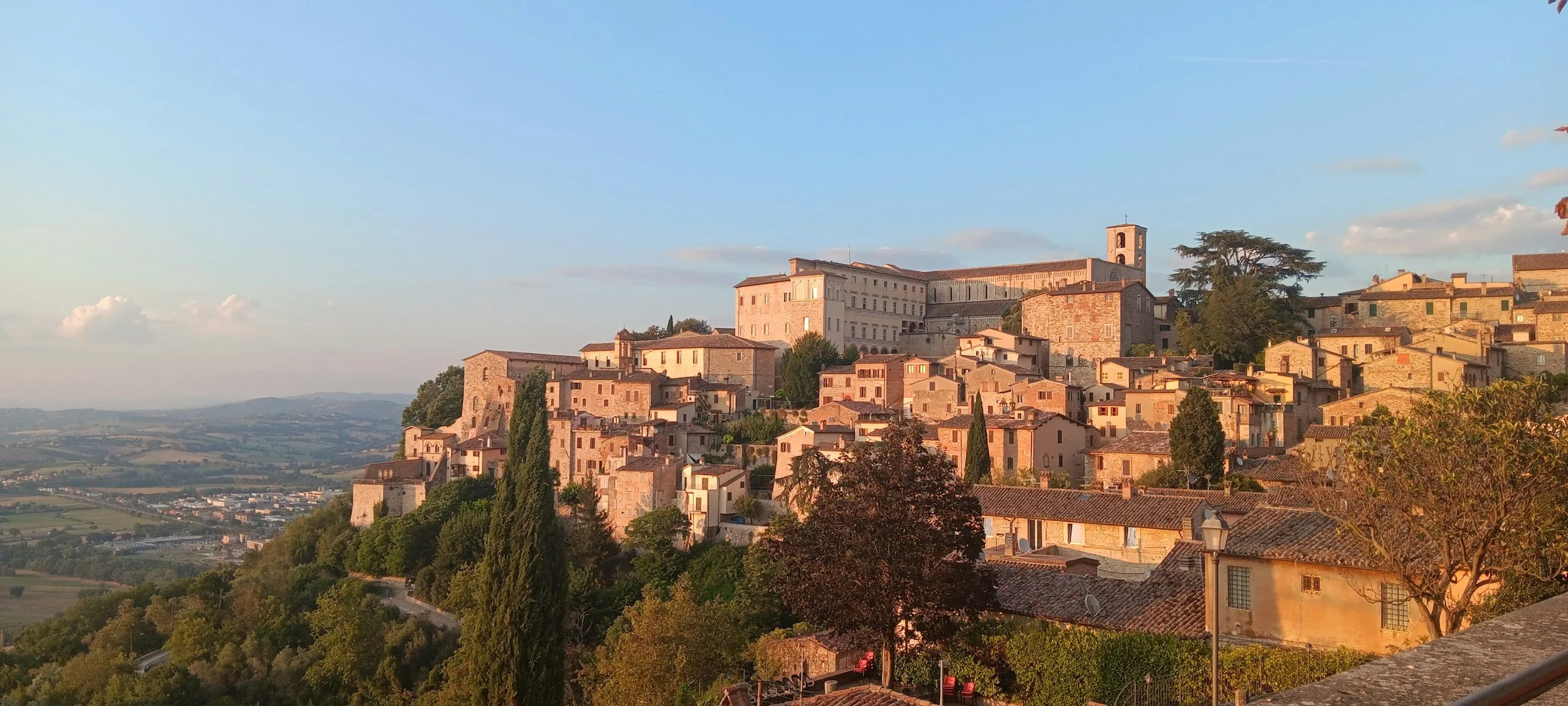
ABOUT: Nestled right in the center of Umbria, Todi began as an ancient Umbri and Etruscan settlement before becoming a Roman municipium. The surrounding countryside is scattered with the enchanting ruins of castles, an amphitheater, forum and necropolis. Its dramatic hilltop position and hardy defense system saved the town from destruction on more than one occasion in its long, turbulent history. The result today is a town that is well-preserved in time; three sets of concentric walls — the innermost Etruscan, the central Roman and the outer Medieval — still stand today. The entire settlement still rests upon an intricate network of ancient Roman cisterns that were in use as late as the 1920s.
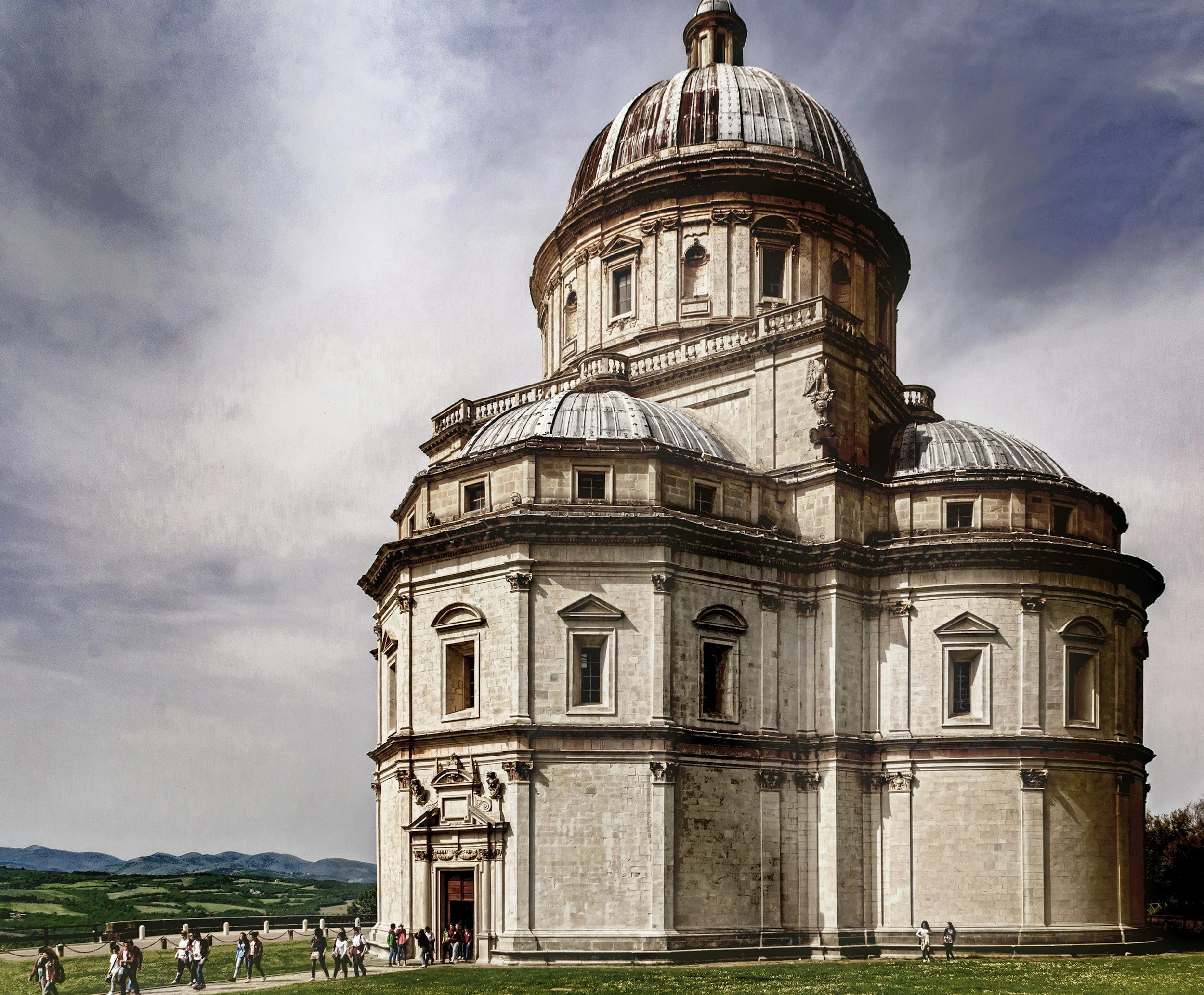
WHAT TO DO: At the heart of Todi’s historic center is the medieval Piazza del Popolo, one of the most photogenic squares in Umbria. It is flanked by many of Todi’s main landmarks, including the 13th-century Palazzo del Popolo, the 14th-century Palazzo dei Priori and the Romanesque-Gothic Duomo. Also situated on the eastern edge of the famous square, the Gothic Palazzo del Capitano is now home to the Museo Pinacoteca Comunale, which houses a collection of 17th-century paintings and ancient artefacts. There are many fascinating churches in Todi, but the town’s crowning glory is the Tempio di Santa Maria della Consolazione, a masterpiece of late Renaissance architecture and one of the talleTs Renaissance buildings in Umbria.
For the best views of Todi and the surrounding landscape climb the 14th-century bell tower (“campanile”) of the San Fortunato church. The Piazzale IV Novembre is the highest point in town with peaceful green spaces and the ruins of an old fortress. Todi is frequently described as the "most livable city in the world" by international publications, echoing the local pride and folklore that celebrate the city's breathtaking views. Rooted deeply in regional folklore and history, these famous sayings, legends, and sayings define Todi. You will have to let us know your thoughts after visiting there.
Todi hosts an open-air market each Saturday along the Via Menecali, selling local fresh produce, homeware and clothing. If you are visiting in the winter months, be sure to also stop by Todi’s Christmas market in the arcades around the Piazza del Popolo.
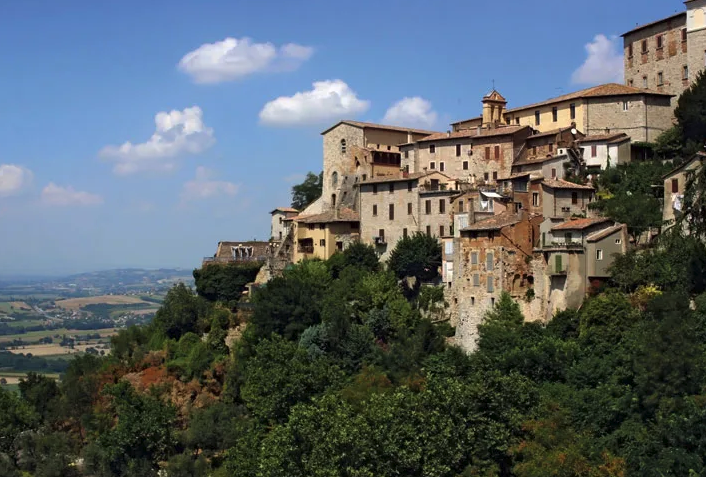
WHERE TO PARK: Large paid parking lot accessed by elevator or pedestrian path to the center of Todi, crossing the Oberdan Gardens from which you can enjoy a splendid view of the surrounding area.
Parking for campers and buses is also available.
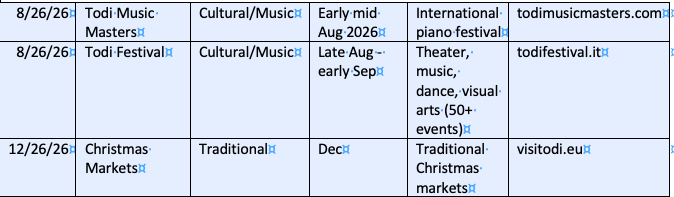
IMPORTANT DATES, FESTIVALS, & MARKETS
WHAT TO EAT: Local cuisine in Todi has evolved from an ancient Umbrian culinary tradition; the food is simple, and flavors rich. The simplicity of cucina povera (peasant cooking) in Umbria has created staples from ingredients like legumes, lentils, chickpeas, and fava beans. As with the other small villages in Umbria, popular game dishes include wild boar, hare, and pheasant, with wild pigeon (palomba alla ghiotta) a particular specialty in the Todi region. Of course, no traditional Umbrian fare is complete with the famous black truffles, cured meats like Prosciutto, Salami and Mazzafegati, and Umbrian olive oil. R
istorante Umbria, https://www.ristoranteumbria.it/it/, is one of the oldest and best restaurants in Todi. It has a lovely dining terrace for the best views out over the valley, but the tables by the fireplace are also cozy in winter. Served is traditional Umbrian food in an elegant setting. Honestly, almost any restaurant you pop into in this tiny burb is going to be an Umbrian treat.
““L’amore ha questo officio, unir dui en una forma” (Love has this function: to unite two into one form). ”