
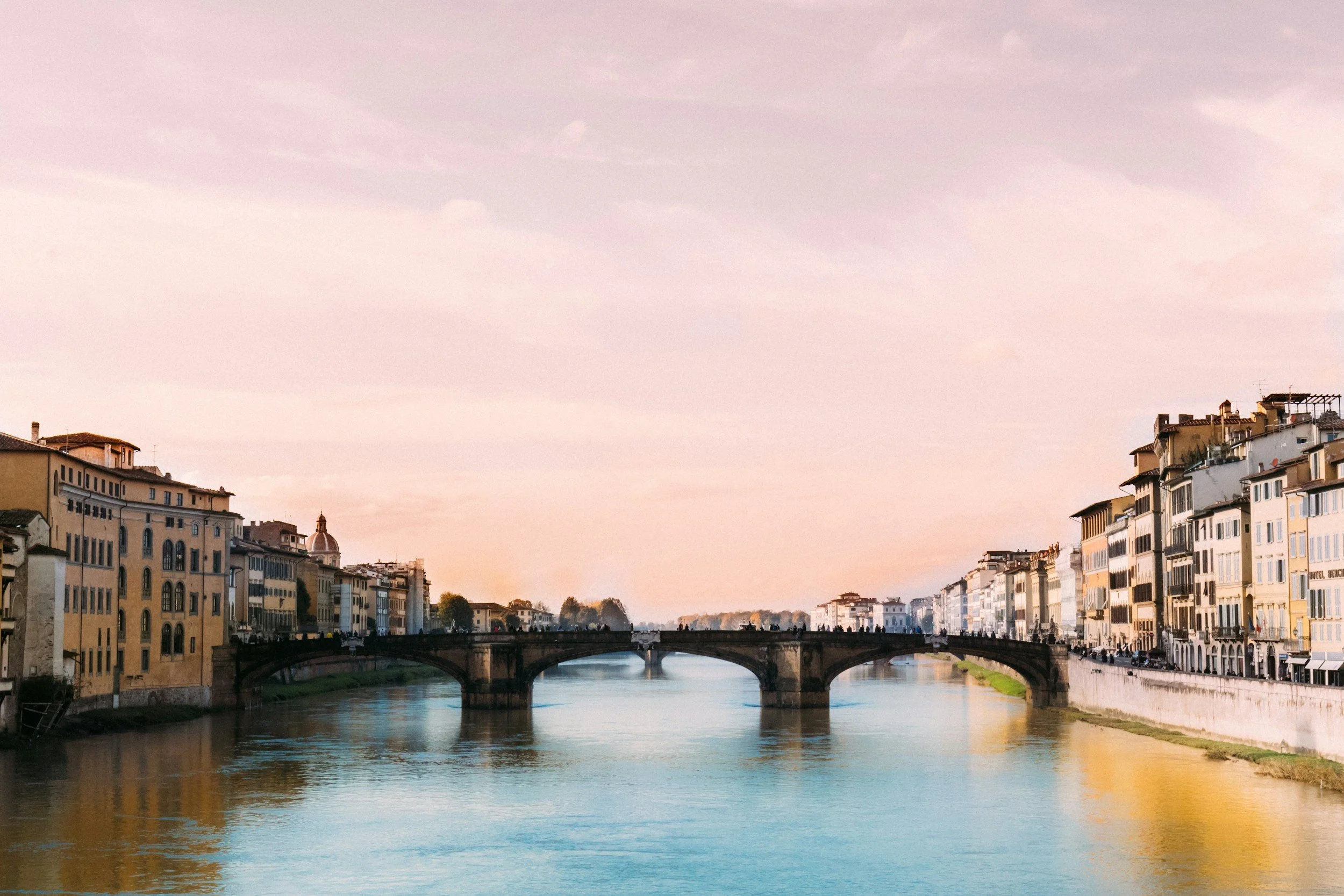
FLORENCE
“To see the sun sink down... and overwhelm Florence with tides of color that make all the sharp lines dim... turn the solid city to a city of dreams, is a sight to stir the coldest nature.”
ABOUT: Florence is an overwhelming, breathtaking, and intensive experience, particularly for those that have never visited Italy before. This beacon of art, food and culture is an easy 1.5-hour train ride from our home, and we highly recommend not to rush the experience. Plan for a minimum of two days to explore this fabulous place to be able to soak it in without getting completely worn out. From the train station, there is a gradual slope uphill into town, and from there the walking is on even-ish surfaces, although the condition of the sidewalks leaves little to be desired. Another strong recommendation is to checkout this great website to see all that this city has to offer, there is a great interactive map as well as several great tips on what to see, they even have free downloadable MP3 self-guided tours: https://www.italyguides.it/en/tuscany/florence/interactive-map-of-florence
Florence was, and is, the capital of the Renaissance. Under the patronage of the powerful Medici family, in the 1400s and 1500s, this was the cultural center of the Western world. The legacy of this period is unrivalled anywhere on the planet and is preserved on the walls of the Uffizi Gallery, on the massive dome crowning the cathedral, and in churches like Santa Croce and Santa Maria Novella.
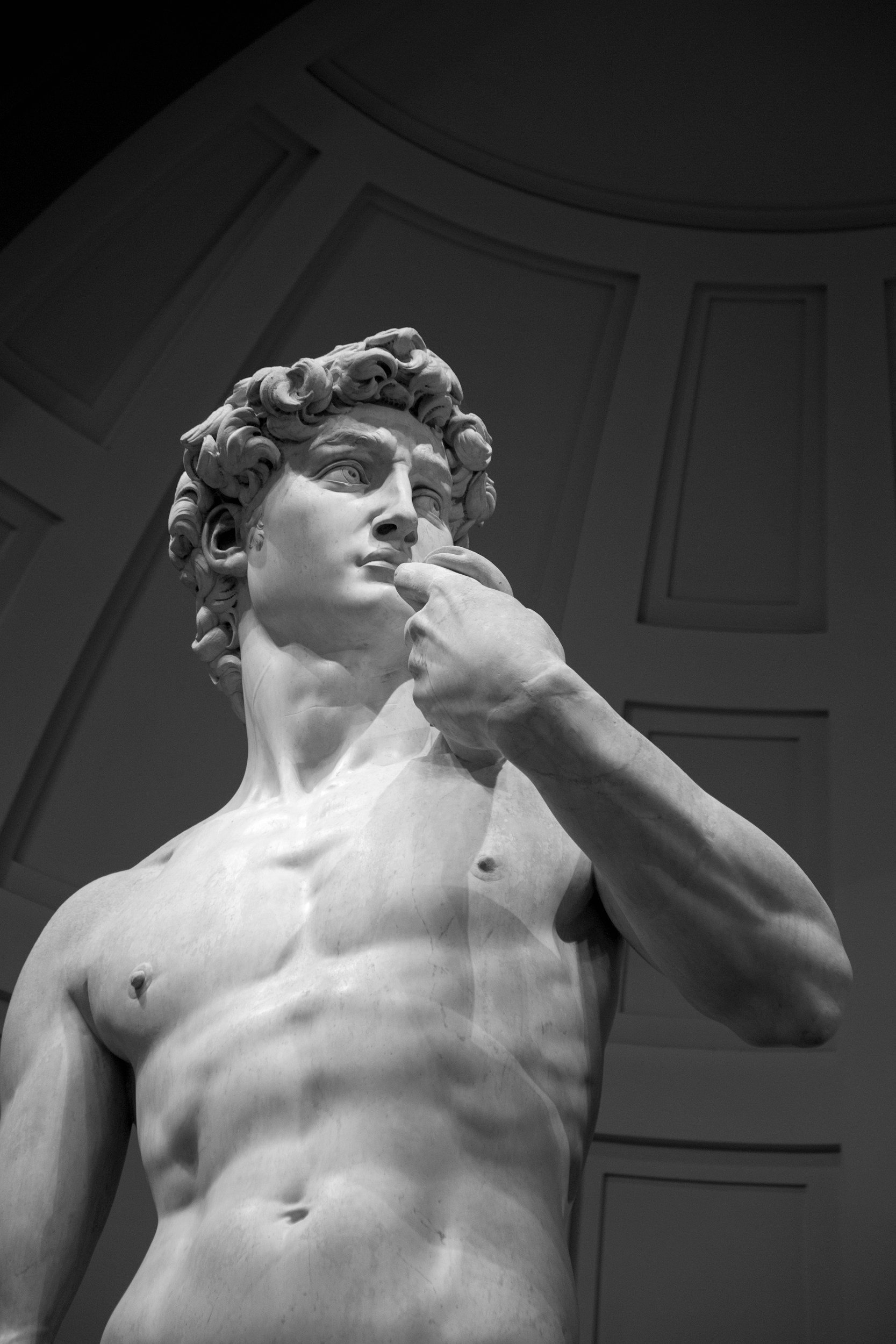
The Uffizi houses the world’s best collection of Renaissance painting: Giotto, Raphael, Michelangelo, Botticelli, Leonardo da Vinci, and many, many others are all here. Michelangelo’s David — aka “Il Gigante” —originally stood almost right outside until 1872, when the statue was moved to a room at the Accademia designed to show him off. Cross the famous Ponte Vecchio Bridge there are still more masterpieces on the walls of the Pitti Palace. Florence was also Italy’s first fashion capital. It is still home to design icons like Gucci and Ferragamo.
WHAT TO DO: This is a “must” destination for art lovers as fabulous architecture literally assault your vision, wherever you wander.
Cathedral of Santa Maria del Fiore: This church was begun in 1296, but remained undomed until the 14th century, when Filippo Brunelleschi came along in the 1440s with his revolutionary double-skinned dome, the crowning achievement of Renaissance architecture. (I highly recommend you read the short novel, Brunelleshi’s Dome before visiting this masterpiece). To this day, architects are still unable to determine how this dome is still standing today, as it defies logical explanation based on its height, shape and width. You can climb to the top for the best views over the city: WARNING: Not for claustrophobes or anyone with a fear of heights!
The octagonal Baptistery beside it has more ancient roots. No one is sure exactly when it was built, but it has been confirmed that it was before the 8th century. Lorenzo Ghiberti's Gates of Paradise — its bronze east doors, facing the cathedral — show scenes from the Old Testament. They took a couple of decades to make, unveiled in 1452. Restored originals are exhibited at the Museo dell’Opera del Duomo.
Sante Croce: Across town, the nave at Santa Croce is lined with monumental tombs of famous Florentines, including Michelangelo, who died in Rome, but his body was smuggled back home; Macchiavelli; and Dante (actually a memorial, because he died in exile, in Ravenna).
Bobli Gardens: You will find one of Italy’s grandest gardens within Florence’s city limits. Behind the Palazzo Pitti, the Giardino di Boboli is laid out in formal Renaissance style, with ordered walkways, secret views of the palace and skyline, and hidden corners, complete with dancing fountains. Fun fact, this garden was the backdrop for the first opera ever composed: Jacopo Pieri set “Euridice” to music for the 1600 marriage of Maria de' Medici and Henri IV of France. This is a lovely place to wander if you would like a break from the normal crowds around the other more touristy destinations.
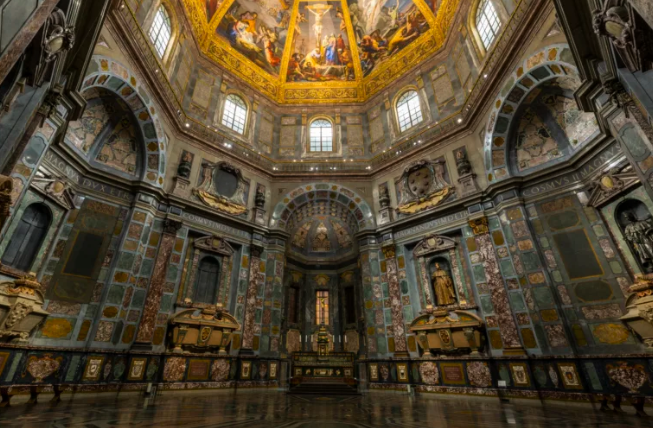
Cappelle Medicee: A truly hidden gem, this is a lovely place to visit that gets passed over by most tourists, is easy on the budget, and is a truly remarkable experience. The Museum of the Cappelle Medicee consists of the funeral chapels of the Medici family at the Basilica of San Lorenzo in Florence, declared national monument and transformed into a state museum in 1869. The visit starts from the Medici Crypt, where the Grand Dukes and their families are buried. On the upper floor stands the Cappella dei Principi, the mausoleum of the Medici Grand Dukes, dazzling with multi-colored marbles and hardstones, crafted by the highly-specialized grand-ducal workshop; started in the Baroque period, the chapel was completed with the frescoed dome by Pietro Benvenuti (1828-37) under the Habsburg-Lorraine family, who took over from the Medici on the throne of Tuscany, and whose tombs are in the Lorraine Crypt.
The Sagrestia Nuova, an absolute masterpiece of architecture and sculpture by Michelangelo (1519-1534), was commissioned by two Medici Popes, Leo X and Clement VII, to house the tombs of Lorenzo the Magnificent and his brother Giuliano, and those of their heirs Lorenzo, Duke of Urbino and Giuliano, Duke of Nemours, whose death put an end to the Magnificent’s family branch. The funerary monuments of the two dukes are adorned with their ideal portraits and with the renowned allegorical sculptures of Night, Day, Twilight and Dawn, powerful nudes representing Michelangelo’s grandiose human ideal. On the tomb of Giuliano and Lorenzo the Magnificent are placed the Madonna and Child between Saints Cosmas and Damian, patrons of the Medici family.
SHOPPING: I do have to mention that for this town, as it an excellent place to purchase a little something for yourself or for gifts. The main haute couture drag is Via de’ Tornabuoni. Along here, and in side-streets like Via della Vigna Nuova, you’ll find major names in Florentine fashion, as well as Milanese and world designer labels like Prada and Armani. Florence also has the flagship store for internet fashion sensation Luisa Via Roma.
There has been a “pharmacy” on the site of the Officina Profumo-Farmaceutica di Santa Maria Novella since it was founded by Dominican friars in the 1600s. The present apothecary shop sells top-end fragrances and skincare for everyone (even your family pet).
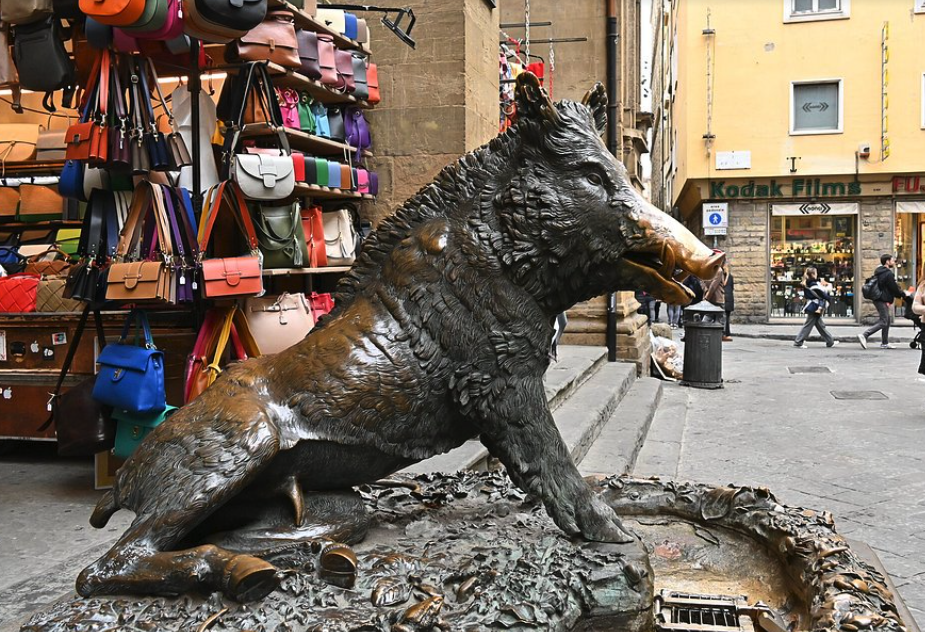
Leather manufacture is a Florentine tradition. Although lots sold in city shops and markets is imported, the Scuola del Cuoio (Leather School) trains the next generation of artisans and sells only their students’ hand-made wares. Turn up during school hours (weekdays only) and you can watch trainee artisans at work. Florence also has many street markets. The Mercato di San Lorenzo is stuffed with souvenirs; the Mercato Centrale is Florence’s covered food market, selling everything from salami and cheeses to Chianti wine. The upper floor is Italian street food heaven. For leather goods, the Mercato del Porcellino is always a fun time with leather goods available in just about every color under the rainbow. Competition is fierce at this place, so look around and when you find what you like, the sellers are almost always up to haggling.
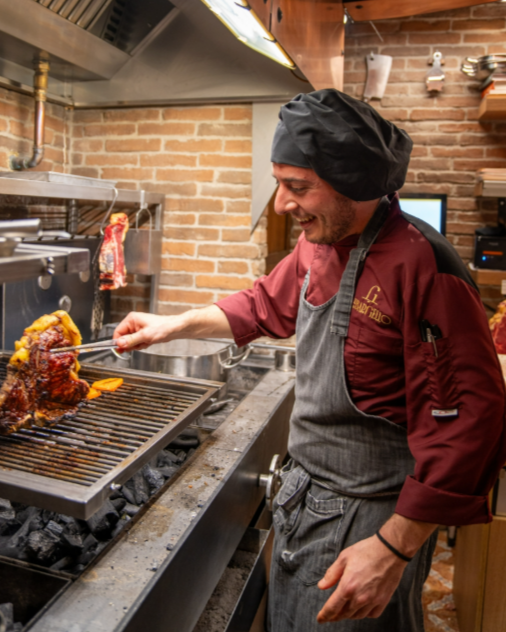
WHAT TO EAT: Florentine flavors are bold, seasonal, and straightforward, and the city’s trademark cooking style is typically no-nonsense, the pride of Florence, the flame-grilled beef from the Chianina breed of cattle makes an authentic bistecca alla Fiorentina, (Florentine beef steak). Other great traditional dishes include spezzatino (veal stew), roast meats, and trippa alla fiorentine (tripe cooked with tomatoes). Another fun fact: ALL restaurants that operate within the Tuscan region must have 80% of their food sourced from Tuscany.
Florence fights it out with Sicily for the claim to have invented gelato, an ice-cream-like dessert made with fresh milk, and the city’s gelato parlors are some of the best in Italy. Florence is the most cosmopolitan city in central Italy. If you want craft beer, it is thriving in this town, or you can opt for a more unique cocktail, the Negroni, a combo of Campari, gin, sweet red vermouth. Florence claims to have invented the negroni in 1919 for a thirsty Italian count.
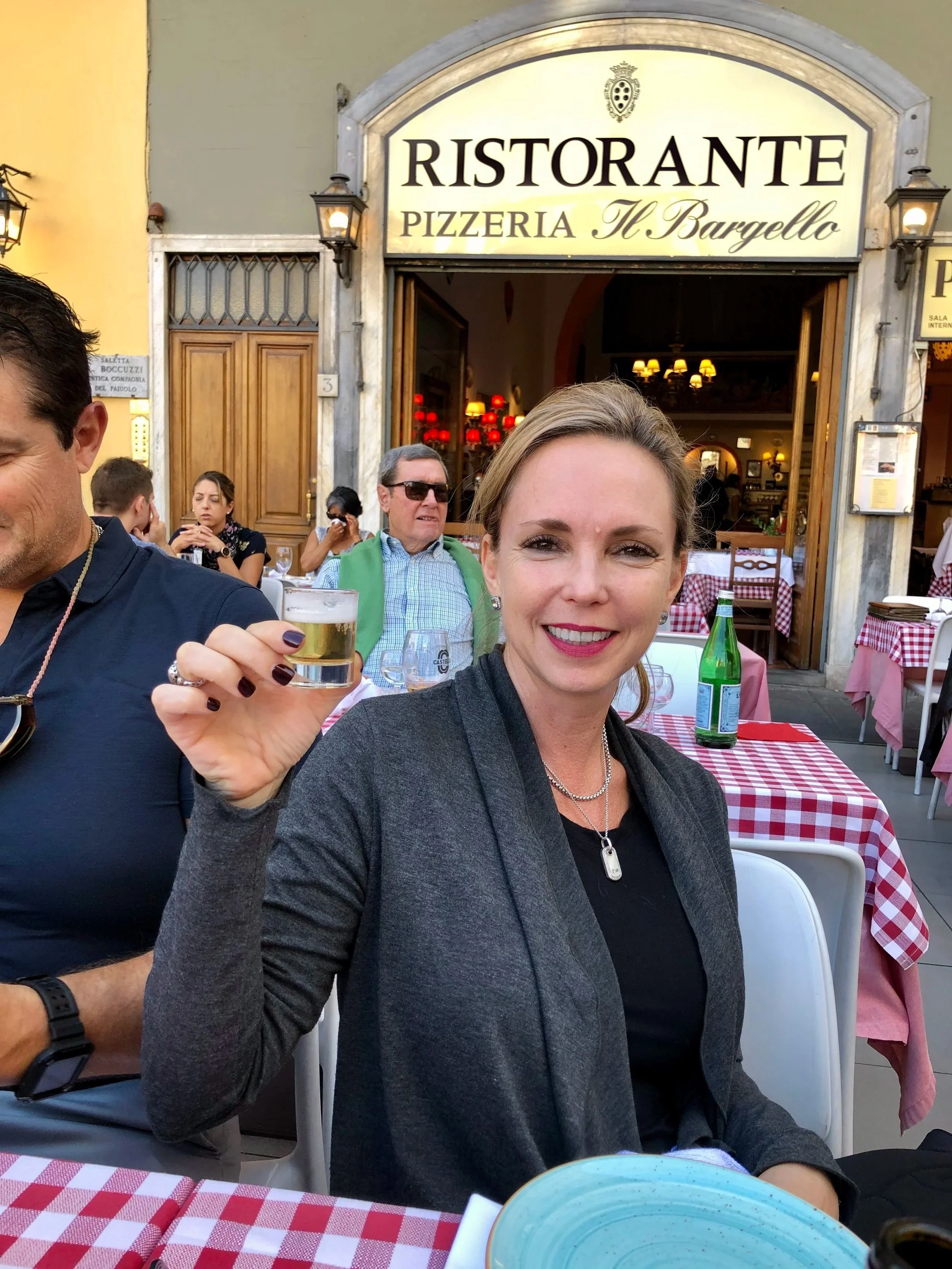
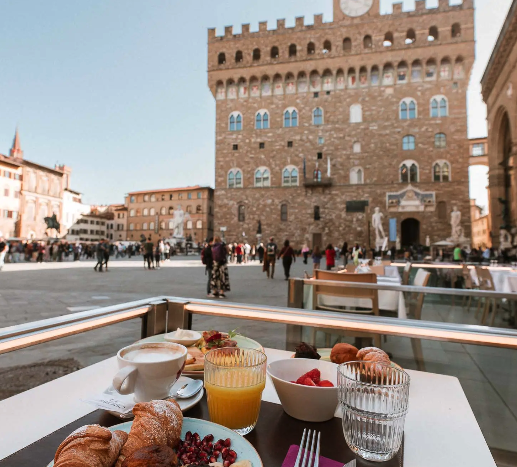
Our favorite place to hit for lunch on a site seeing day is Ristorante & Pizzeria Il Bargello for several reasons that we simply do not venture any further than here when we are on a day trip. The location is right on the piazza where the Signoria sits, the service is always great, the food is great and reasonably priced considering it’s location, and there is indoor and outdoor dining. What’s not to love : ) For the ultimate kicker, it is one of the few places that actually serves a true breakfast for those that need their first meal of the day to be fabulous.
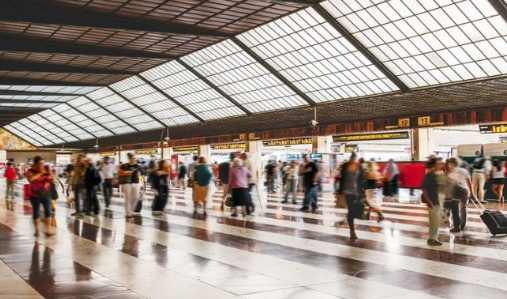
HOW TO GET TO FLORENCE: We absolutely do not recommend attempting to drive in Florence, as the volume of traffic, the lack of signage, the apparent lack of standard rules, and the sheer chaos of the city makes driving here the last place that you would really want to navigate. the primary train station is Santa Maria Novella and has high speed routes to all the major cities in mainland Italy.
To access Florence by plane, there is the Florence Airport (Aeroporto di Firenze-Peretola) is the second most important airport of Tuscany. Of note, the airport and the train station are not near each other and do require a cab to get from Point A to Point B.
If you do have a rental car and would like to see Florence, you can opt to park at the airport or there is Parcheggio Villa Costanza, located directly on the A1 motorway (between Firenze Scandicci and Firenze Impruneta), this is the easiest option for drivers arriving via highway. It costs just €7 for a full 24-hour period. You simply park, walk directly to the T1 tram line, and reach the central Santa Maria Novella (SMN) station in 22 minutes.